Why parts wear out
Abrasion grinds away steel as rock, sand and soil slide across it. Impact batters it. Which type of wear dominates changes what protection works best.
What hardfacing is
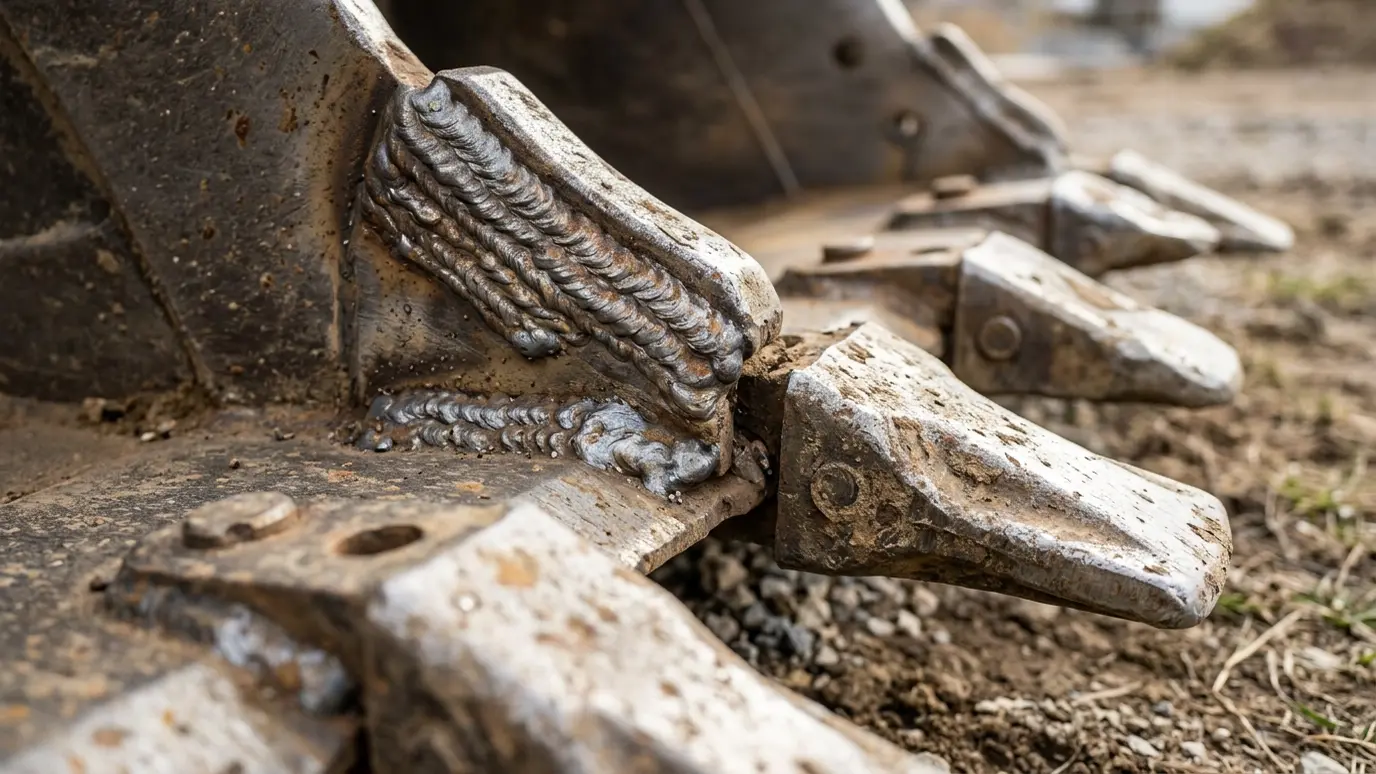
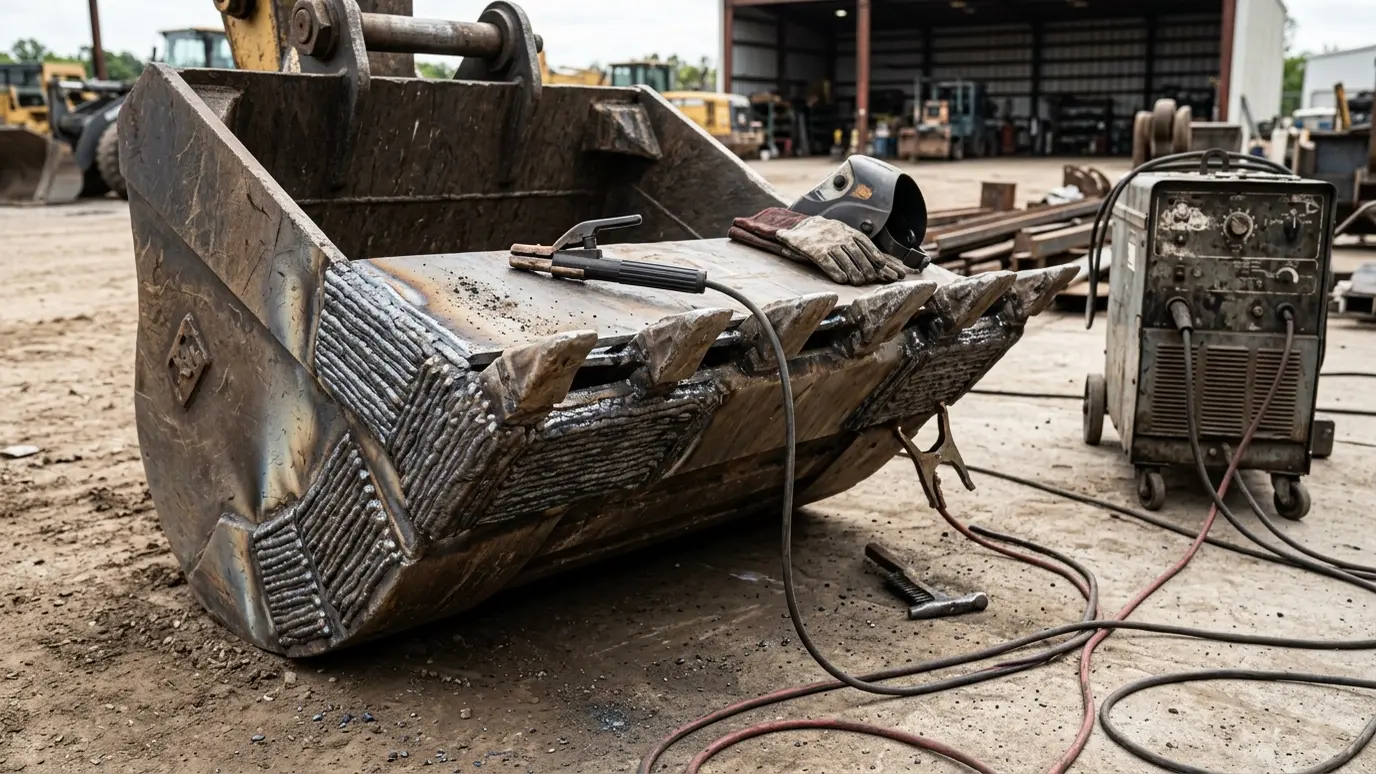
Hardfacing is a weld overlay of hard alloy applied to a surface. It is built up in beads or patterns that resist wear far better than ordinary steel.
What wear plate is
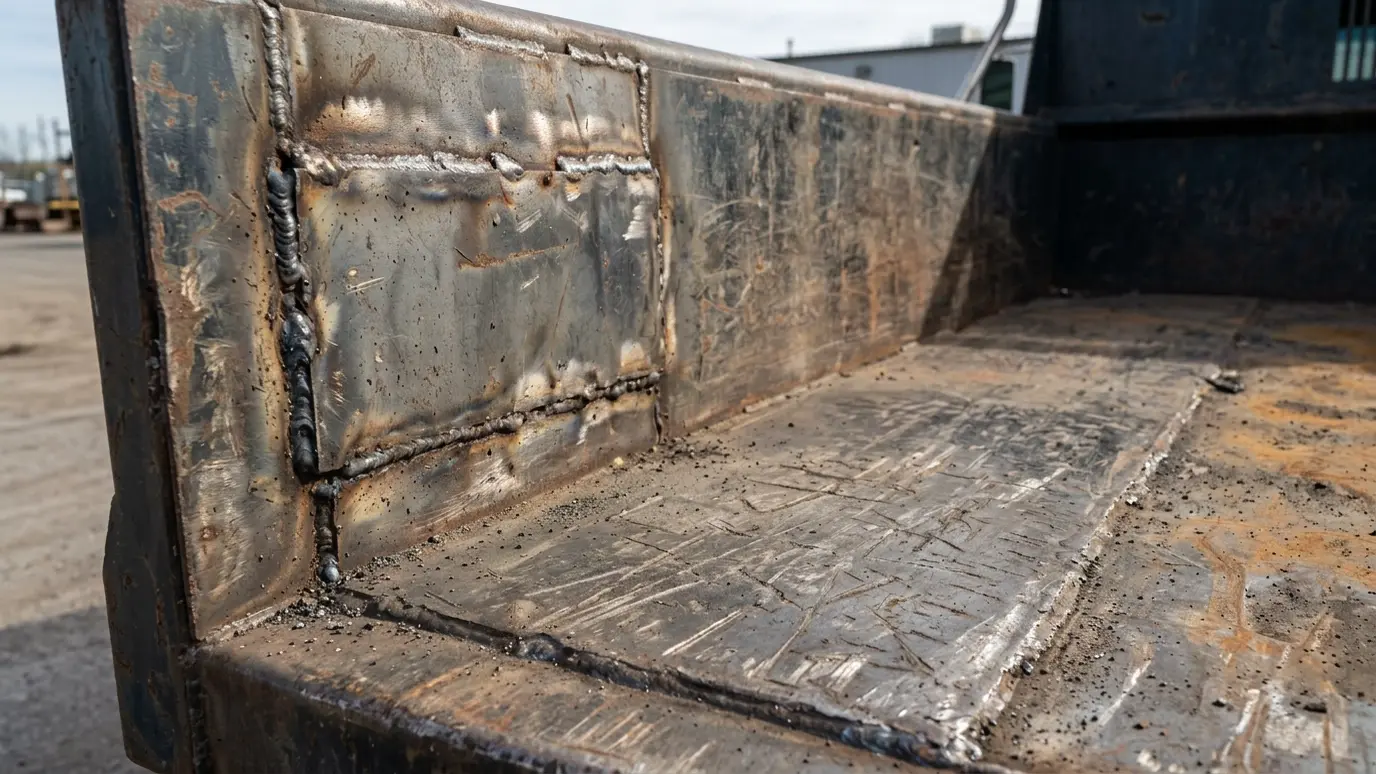
Wear plate is abrasion-resistant steel that is welded or bolted over a surface as a liner. It is replaced when worn, which keeps the base part intact.
Choosing between them
Hardfacing suits edges, teeth and complex shapes. Plate suits flat floors and large surfaces. Some parts get both. The choice depends on the type of wear, the part shape and how often you can service it.
Where it pays off
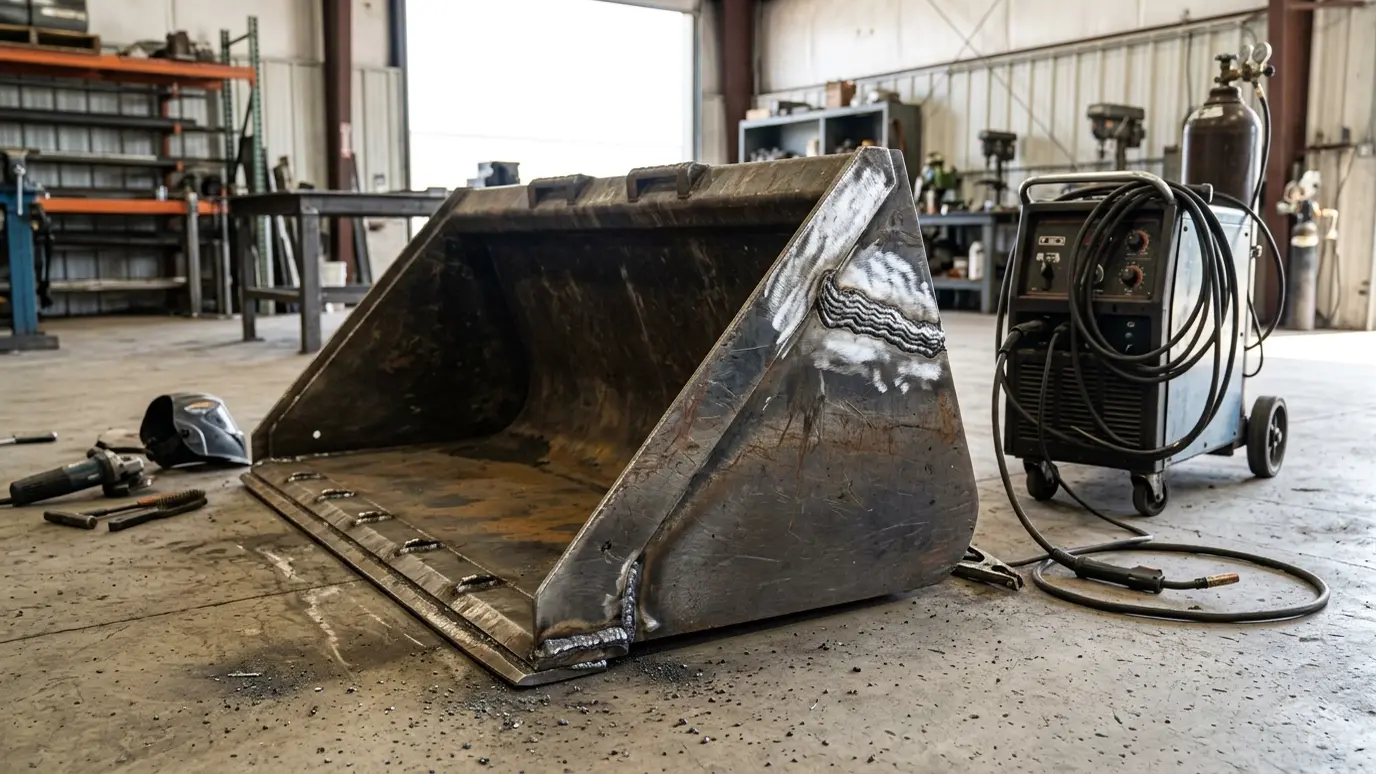
It pays on parts that wear fast and cost a lot in downtime or replacement: bucket edges, dump body floors, auger flights, crusher parts and plow points. It pays less on parts that rarely wear.
Applying it well
Surface preparation, correct alloy and proper heat control make the difference. Poorly applied hardfacing can chip, crack or peel. Ask how it will be applied and what to expect.
Protect the parts that wear fastest and keep a simple record of how long they last.