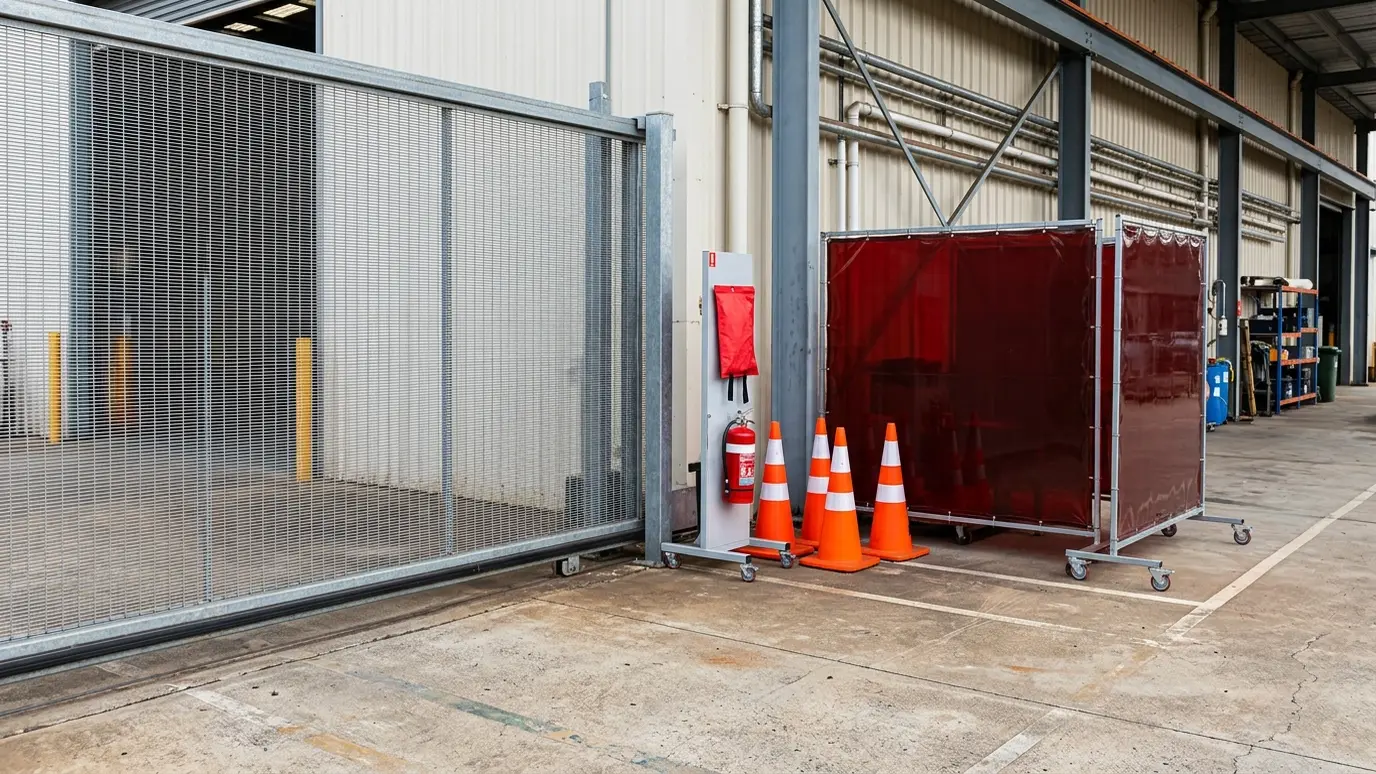
Hot work and fire risk
Welding throws sparks and slag that can travel many feet and start fires in dry grass, wood, insulation and trash. Preparation before the arc is the most important safety step.
Clearing the zone
We move combustibles away, cover what cannot be moved with welding blankets and wet down dry vegetation where needed. We ask you to clear vehicles, stored fuel and flammable materials from the area.
Fire watch
After welding stops, we watch the area for smoldering. Fires can start hours later in hidden spots, so we recommend checking the area again before you leave it unattended.
Ventilation and fumes
Welding makes fumes and gases that are harmful to breathe. We weld outdoors or with good ventilation and use respiratory protection when coated, galvanized or painted metal is involved.
Protective gear
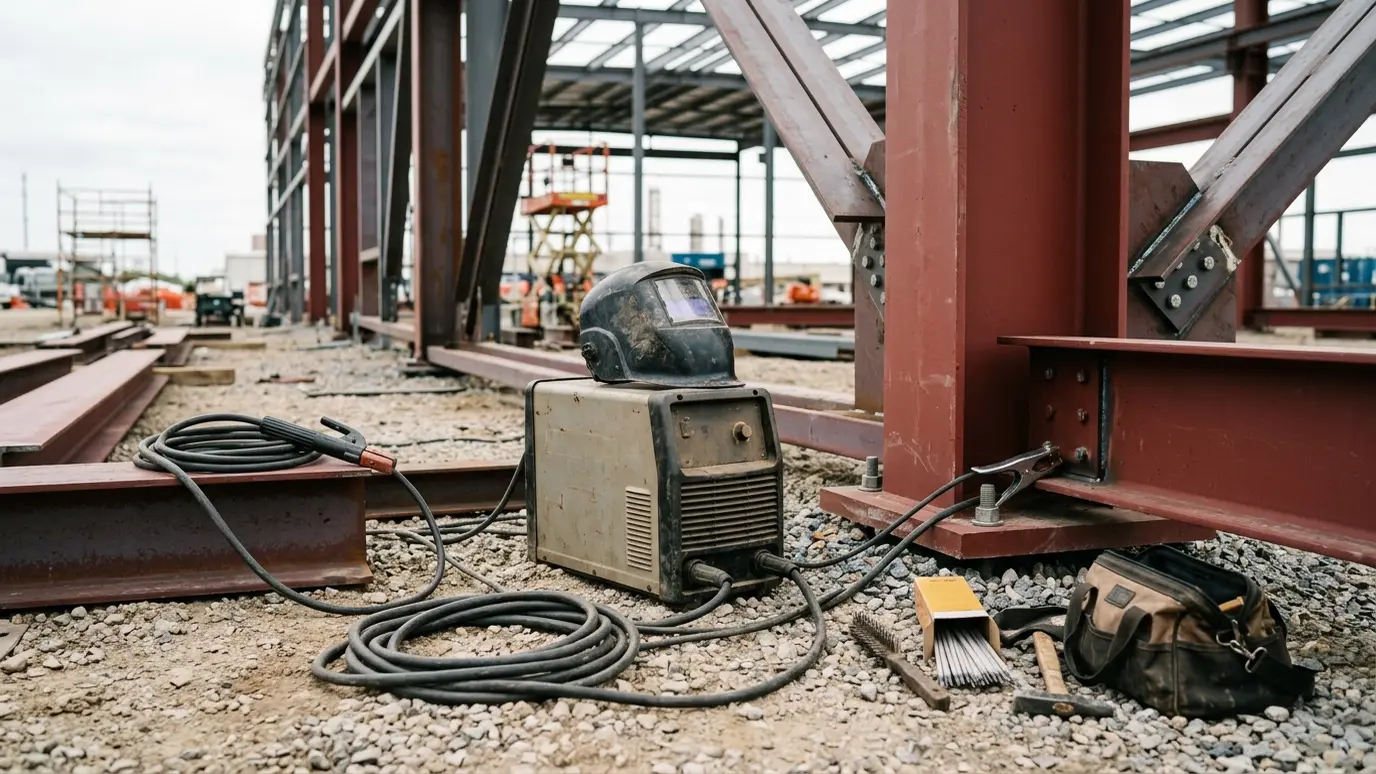
Welding helmets, gloves, jackets and boots protect against arc light, burns and sparks. Bystanders should keep distance and never look at the arc without protection.
What you can do
Keep children, pets and onlookers away, point out gas lines and electrical hazards and tell us about stored fuel or hidden combustibles. Have an extinguisher and water source available.
Clear the zone, watch it afterward and keep everyone away from the arc.