Time is the main ingredient
Most welding work is labor. A repair that takes an hour costs less than one that takes a day, and the time includes preparation, cutting, fit-up, welding, grinding and finishing, not just the arc time.
Ask how the estimate was built. A fair quote explains the time involved and the steps, not just a total.
Hourly or per-job
Hourly rates suit open-ended repairs and lists of small jobs. Per-job pricing suits defined work such as a gate hinge or a trailer tongue. Both can be fair, and each has risks: hourly can drift, per-job can miss hidden problems.
A good welder tells you which is better for your project and puts it in writing.
Materials and consumables
Steel, hardware, filler wire or rod, shielding gas and grinding discs all count. Specialty metals such as stainless and aluminum cost more than mild steel, and so does the gas and filler that goes with them.
Ask whether materials are included and whether you can supply your own, which is often fine for structural pieces if they are the right grade.
Travel and setup
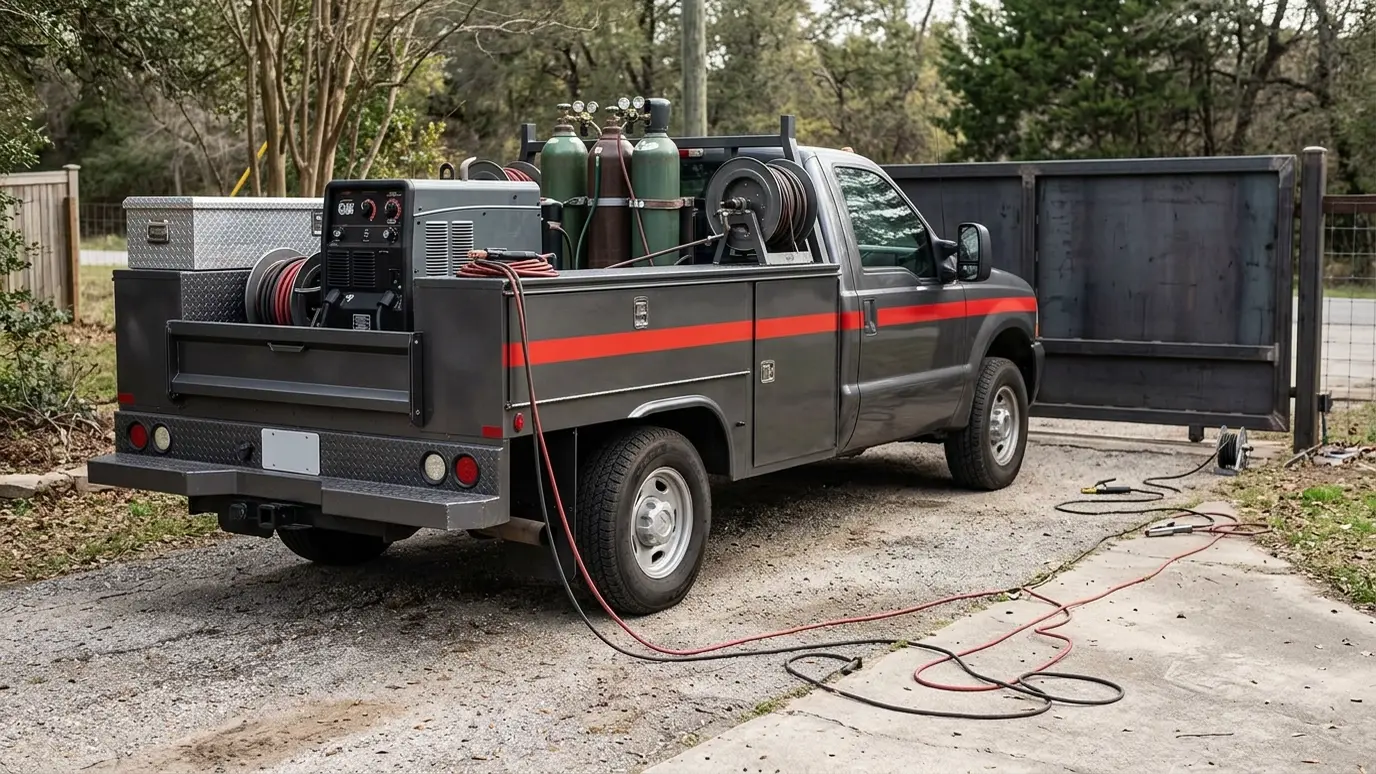
A mobile welder drives to you and sets up a rig. Distance, access and the amount of equipment needed all affect the visit. Many welders have a minimum visit time because travel and setup cost the same for a short job as for a long one.
Bundling several small jobs into one visit spreads that overhead.
Conditions and complexity
Welding in a cramped space, on an upper floor, in cold weather or on rusty, old steel takes longer. Thick or specialty metals need more preparation. Hidden damage found after cutting also adds time.
How to compare quotes
Compare scope, not just totals: what will be welded, what materials, what finish and clean-up and what happens if hidden problems appear. Ask for a written estimate and how the price changes if the job does.
Send photos, bundle small jobs and compare written scopes rather than headline numbers.